AI slop: why cheap content costs your brand
It has never been faster to make content, and it shows. Here's what generic AI content does to your brand, and how to use AI without ending up there.

It has never been cheaper to make an ad, a blog post or a product image. A couple of lines in an AI tool, and there it is. The problem is that everyone else is doing the same, and it shows.
There's a word for it now. Merriam-Webster named slop its word of the year in 2025: the large, uniform layer of AI content made quickly and without anyone really deciding what it should say. For a brand, that's not a cosmetic problem. It's about whether people notice you at all.
What AI slop is
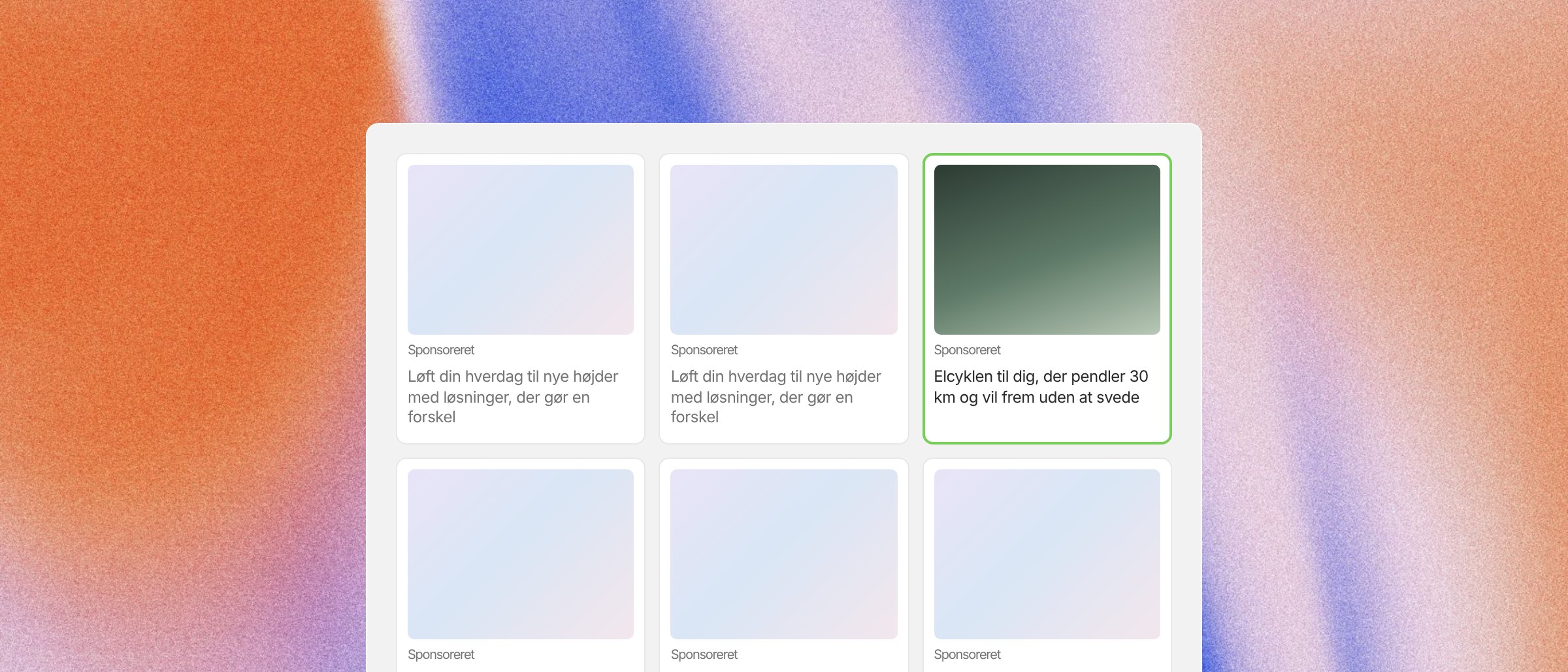
AI slop isn't the same as content made with AI. It's content where the AI made the decisions: which angle, which words, which image. The result is the text that could be on any website and the image that looks like a thousand others: smooth, neat and without any edge at all.
Why it costs your brand
- You look like everyone else. A brand is remembered for what's special about it. When the text and the images come from the same models with the same habits, that's exactly what disappears.
- People have learned to recognise it. The smooth phrasing and the slightly too perfect images are read in a split second. Many scroll on, and some deduct a bit of trust from you before they've even read the message.
- The algorithms see it too. Meta groups ads that look too much alike and treats them as one. Ten variants of the same AI ad therefore don't give you ten attempts, but one. We write more about that in Content that learns.
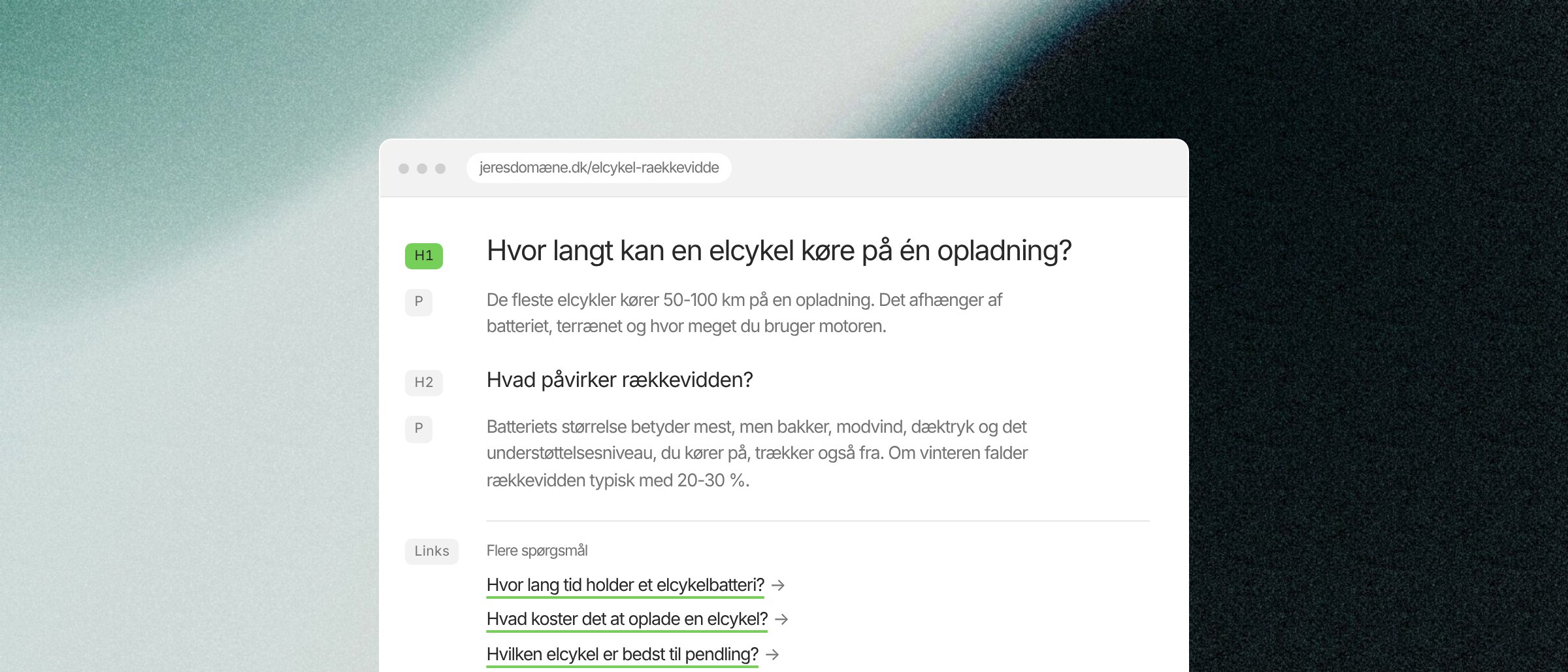
- AI answers don't cite it. ChatGPT and Google's AI answers look for sources that say something concrete and their own. A page that just repeats what everyone else writes has no reason to be mentioned. Read more in How to get mentioned when customers ask AI.
AI isn't the problem. The problem arises when nobody has decided what should be said.
How to use AI without making slop
We use AI every day ourselves, for drafts, variants, translations and everything else that eats up hours. The difference lies in the order: a person decides first, and afterwards the machine helps get further.
Five habits that keep it sharp
The slop check
Before anything goes out, you can ask three questions. They take under a minute and catch most of it.
Three questions before you hit publish
- Could a competitor have published exactly the same thing?
- Is there something concrete in it: a number, a name, an example, a real image?
- Would you stop at it yourselves if you scrolled past?
If you answer yes to the first or no to the other two, it's time for another round, and that round has to be done by a person.