Content that learns: how to find more winners on social media
Most ads never become winners. Here's the model we use to build real variation into the ads, test cheaply and learn something from every single attempt.

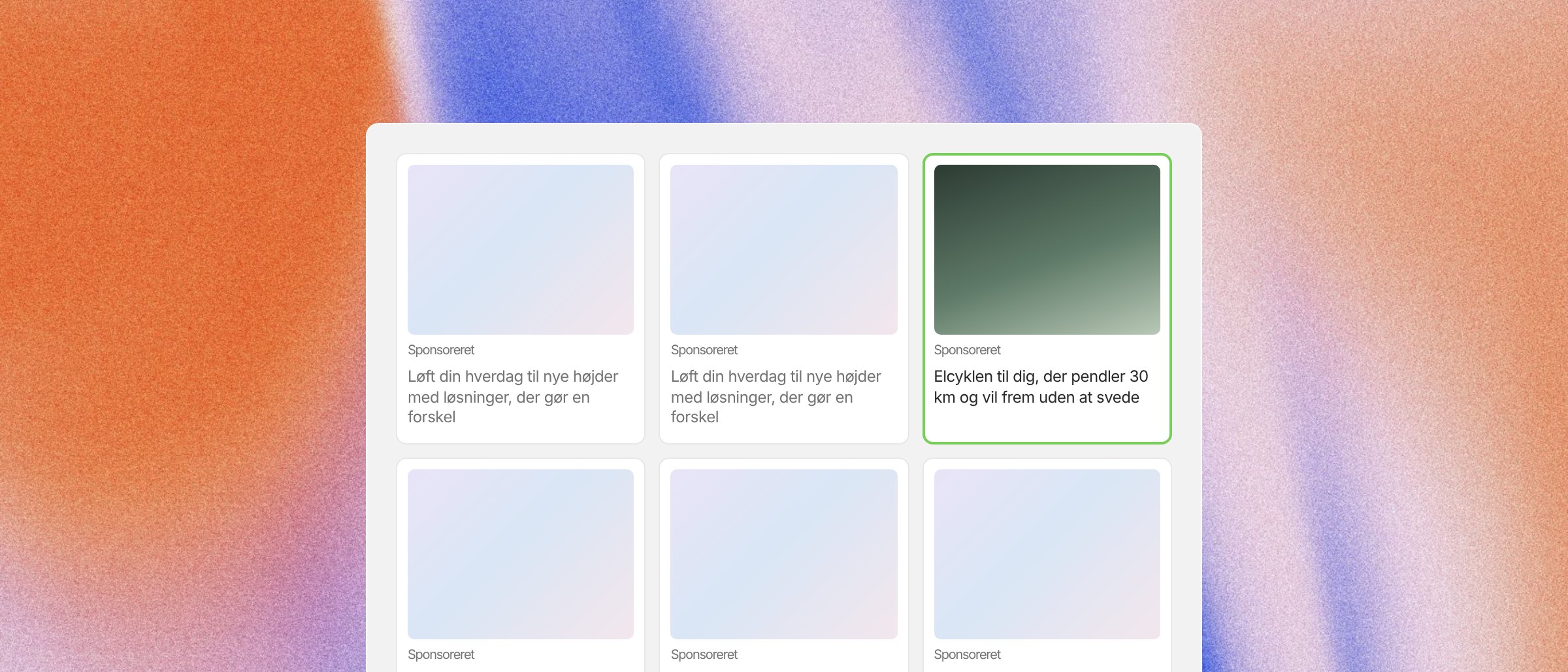
We often see ad accounts with over 100 active ads. And yet there's only one message. Same person, same problem, same promise, just with a new colour, a new hook and a different button.
It feels like testing a lot. In practice the account learns almost nothing, and the reach stays stuck in the same small segment. That's the biggest barrier to scaling the budget profitably. This article brings together the model we use instead: from how you think about variation to how you produce it without blowing the budget.
30 ads are rarely 30 bets
When the ads only differ in colour, hook and button, they're not 30 different bets. It's one ad, made 30 times. Meta also groups ads that look very alike under the same Entity ID and in practice treats them as one ad in the auction. The work on the other 29 is, roughly speaking, wasted.
Content consists of two pillars, and both are needed:
- Exploration is something new: a new audience, a new reason to buy or a new format.
- Iteration is polishing something that already works: a new hook, a new opening or a new version of the format.
The problem arises when you think you're exploring but are really iterating. Then the account has volume but no learning.
The quick test
- Put your active ads side by side.
- For each one, write what it teaches you that the others don't.
- If you can't answer, it's an iteration, not a new bet.
Winners are rare, so you have to take more shots
Most ads never become winners. You probably know the feeling: almost the whole budget ends up on two or three ads. Motion's Creative Benchmarks 2026 analysed almost 580,000 ads from over 6,000 accounts. Only around 5% became real winners, defined as ads that spend at least 10 times the account's median. Even among advertisers spending over USD 1 million a month, it's only around 8%.
So the big advertisers don't hit more precisely. They just take more shots. It's the same logic as in product development and investing: a few hits carry the rest. When the probability of one big winner is low, the strategy can't be to spend three or four weeks on four perfect ads. There has to be a system that keeps sending qualified bets out, and that equation has three parts:
- Volume: enough attempts for a winner to turn up.
- Variation: attempts that are different enough for you to learn something.
- Learning: a fixed way of using the results afterwards.
If one part is missing, the equation stands still. 100 attempts without variation give one experience 100 times. Fantastic variation where nobody reads the results gives nice ads and no progress.
Four axes: persona, angle, format and messenger
Take an e-bike with a long range. Who buys it? Roughly three personas: the commuter who wants to get there without a sweaty shirt. The family with kids who want to do without a second car. And the couple in their 60s who want to keep taking the long rides together. Same feature, three completely different reasons.
This is where many stop. They find the feature people ask for, make an ad about it, and the job's done. But people don't buy the feature. They buy what it makes possible in their lives. That's why we think of content along four axes:
- Persona: who is it?
- Angle: which reason or which problem?
- Format: static, video, UGC, comparison or article?
- Messenger: who says it: the brand, a customer, an employee or a creator?
4 personas × 4 angles × 5 formats give 80 combinations before you've touched hooks and offers. The point isn't that you should produce 80 ads. The point is how small a part of the field you're working in if you run the same persona, the same angle and the same format month after month.
And the work reaches beyond the ads. When you know who buys, and why, it's not just ad material. It's positioning.
Narrow ad, broad portfolio
"If you talk to everyone, you talk to no one." That's a good objection to what we've just described. But in practice the answer is the opposite of what many think: each individual ad should be narrow, while the portfolio of ads should be broad.
One ad, one person, one argument.
The mistake is rarely that the ads are too narrow. The mistake is that they're narrow in exactly the same way, or that they're so broad they don't hit anyone.
The same goes for the rest of the business. When a company doesn't dare to choose, the message ends up as a list: quality, service and wide selection. It's safe, and it's invisible. So the model has a side benefit: it forces you to choose one person and one argument at a time, and to decide who you're actually relevant to.
The purchase is a puzzle
Five people are considering the same robotic lawnmower. None of them should see the same ad, because each is missing a different piece before they buy:
- Trust: €800 is a lot of money for something he hasn't seen in real life.
- Understanding: How does it work in a garden with slopes?
- Value: What do I get back in time?
- Objection: Can it handle my hills?
- Timing: Why buy today rather than in April?
Often the barrier isn't in the ad at all, but in the delivery time, the return terms or the product page. That's why we start by knowing the barriers, not by coming up with hooks. And some barriers are better solved by a change on the site than by a new ad.
Explore cheaply, go deep expensively
The first objection to a broad content model is almost always the same: "That sounds like a lot of production, and it's expensive." It's a fair objection. The answer is to start with what's cheap and scalable.
Take a coffee subscription. Instead of spending a big budget on a shoot day where you think you know what works, we make six static ads with six different angles: "Never run out of coffee", "Freshly roasted, not stale", "Better than capsules" and so on. A static ad can be changed in 5-10 minutes. A shoot day has to be booked.
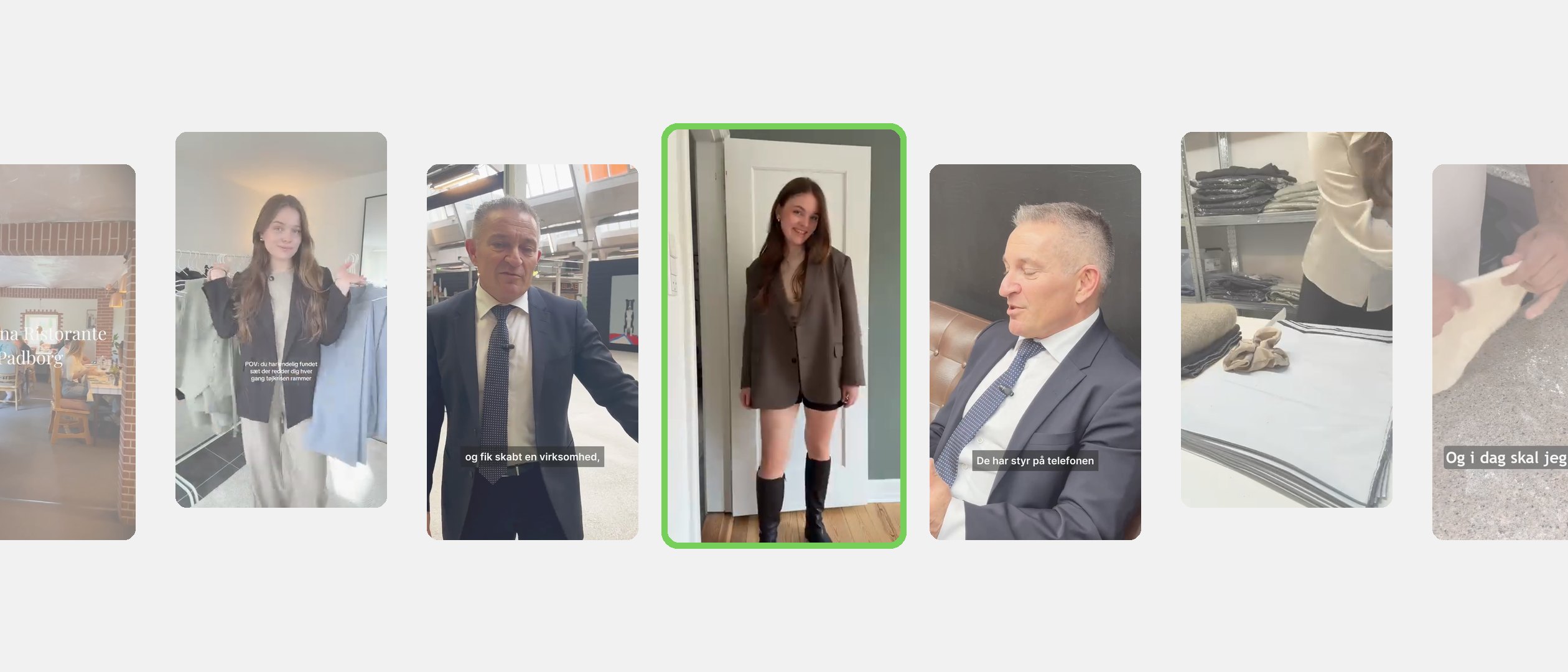
When one angle starts to pull with one persona, we move in with the expensive formats: video, UGC, creators and partnerships. Then you spend the production budget on something you already know works, instead of on a guess. It's the same logic as building a prototype before production.
How to get started
You don't have to build the whole system at once. Start by looking at what you already have, and build the variation in a little at a time.
Four steps for next month
- Go through the active ads and find the ones that are really the same bet.
- Write down your personas and barriers before you write a single hook.
- Make a handful of cheap static ads, each with its own persona and angle.
- Read the results every week, and give the winners the expensive formats.