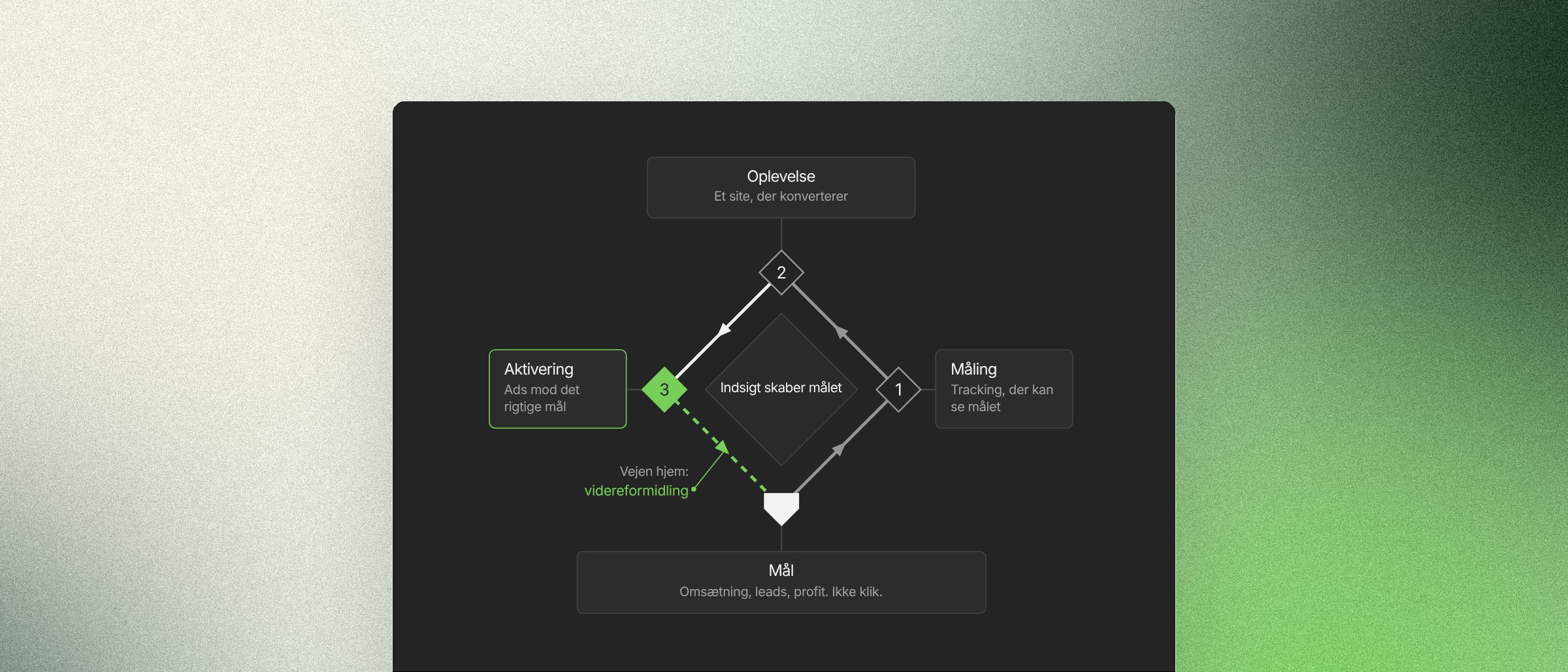
How to get mentioned when customers ask AI
More and more people start their research in ChatGPT, Gemini and Google's AI answers. Here are the five things that decide whether it's your company that gets mentioned.

When a customer asks ChatGPT for the best e-bike for commuting or a good accountant in Kolding, they don't get ten blue links. They get an answer, and the answer contains two or three names. The question is whether yours is one of them.
This isn't a discussion about the future anymore. Google's AI Overviews already sit at the top of a large share of searches, and a growing share of your customers start their research in a chat instead of a search engine. The good news is that most of what works looks like good SEO work.
What AI answers are built on
A language model doesn't decide who's best. It gathers what it can find and trust: your own pages, reviews, mentions on other sites, comparisons and forum threads. The clearer and more consistent the story is across those places, the greater the chance it repeats it.
What the AI reads about you
It also means that AI visibility rarely comes down to one trick. It's about making it easy for the machine to understand who you are, what you sell, and why others recommend you.
Five things that make a difference
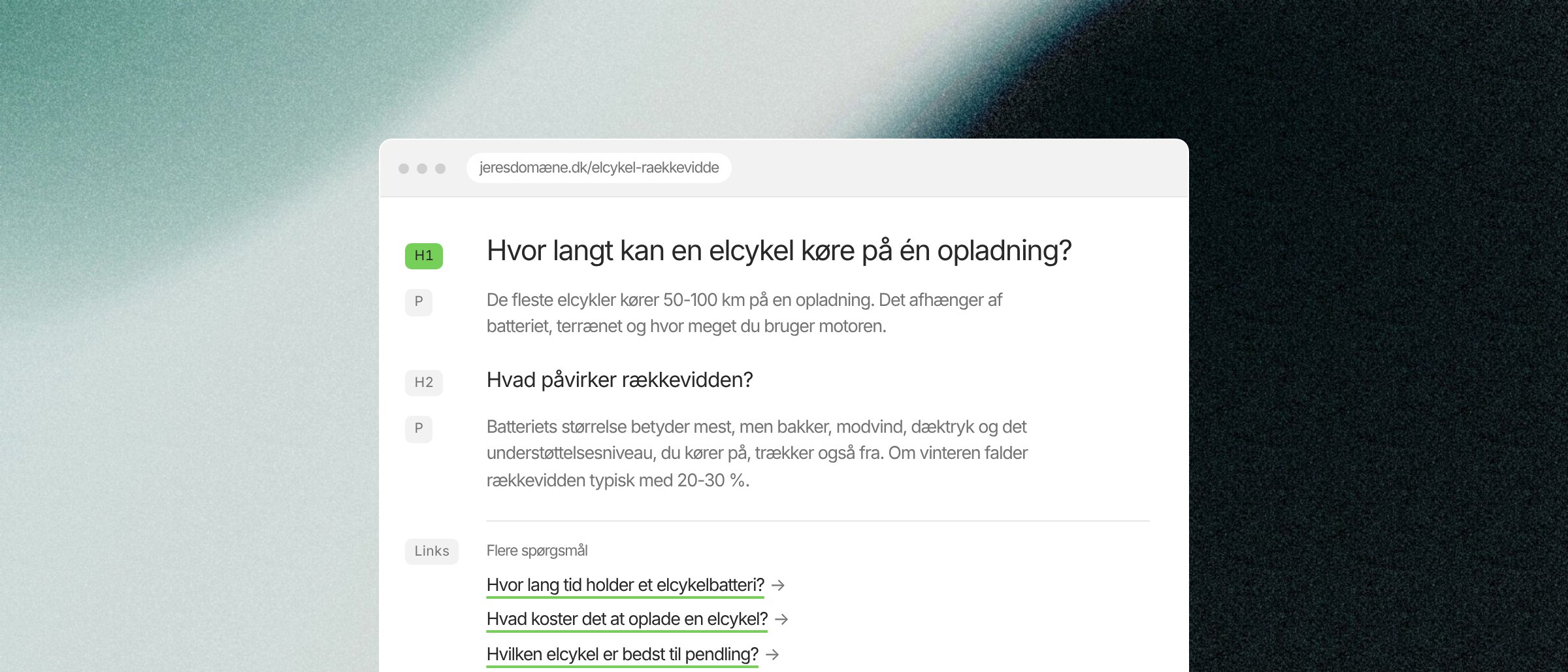
- Answer what people ask about. Write pages that answer the questions customers ask clearly and concretely, ideally with the question as the heading and the answer in the first paragraph.
The question as the heading, a short answer right below, the detail afterwards and links on to the questions people typically ask next. - Be the same everywhere. Name, address, services and prices should match on the site, in the Google Business profile and in the directories you're listed in.
- Tell the machine who you are. Structured data on the site makes it unambiguous what's a company, a product, a price and a review.
- Get mentioned elsewhere. Reviews, articles and comparisons on other sites carry a lot of weight, because the AI uses them to check what you say yourselves.
- Keep the pages fast and readable. A site that's heavy to load or hides the text behind scripts is read worse by both Google and AI.
AI doesn't necessarily cite the biggest in the industry. It cites the one that answers most clearly.
Where to start
Start by asking yourselves. That's your starting point, and it often tells you more than a keyword tool about where the gaps are.
Try it in ten minutes
- Write down the five questions your customers ask most often.
- Ask them to ChatGPT, Gemini and Google.
- Note who gets mentioned, and where you stand yourselves.
After that, the order is the same as in classic SEO: the technical side first, then the content, and then the mentions outside your own site. That's also why we always start with a potential analysis that covers both the Google results and the AI answers.
How to keep track
AI answers move more slowly than ads, so you don't need to look every day. It's not perfect tracking yet, but three things show the direction.